
It can feel intimidating to put together a resume when you’re still in high school or college and don’t have much formal work experience yet. Everyone talks about “standing out,” but no one really explains how to do that when you’re just getting started.
If you’ve been looking at resume examples for college students, you’ve probably noticed something reassuring—they don’t focus only on traditional job experience. Instead, they highlight class projects, campus involvement, volunteer work, leadership roles, and practical skills. That’s because employers and admissions teams understand you’re early in your career. They’re looking for initiative, responsibility, and growth.
Whether you’re applying for your first job, an internship, or preparing for future opportunities, your resume should reflect what you’ve actually learned and contributed so far. With a clear structure and a focus on your strengths, you can create a resume that feels honest, confident, and ready to send.
Why Students Need a Resume (Even With Limited Experience)
It’s easy to think you don’t need a resume until you’ve had a “real” job. But putting one together now actually helps you see how much you’ve already done. Babysitting, helping with a family business, school clubs, sports, volunteer work, and even big class projects all count.
If you look at resume examples for high school students, you’ll notice they focus on effort, reliability, and involvement. Employers know you’re just starting out. They want to see that you show up, follow through, and take initiative. Creating a resume early gives you a head start and something you can keep building on.
Resume Examples for High School Students
Looking at sample resumes is a great way to develop your resume-writing skills. After browsing through templates and examples, you’ll better understand what to include and what to leave off your resume. Here’s a great beginner’s first job sample resume:

Resume Examples for College Students
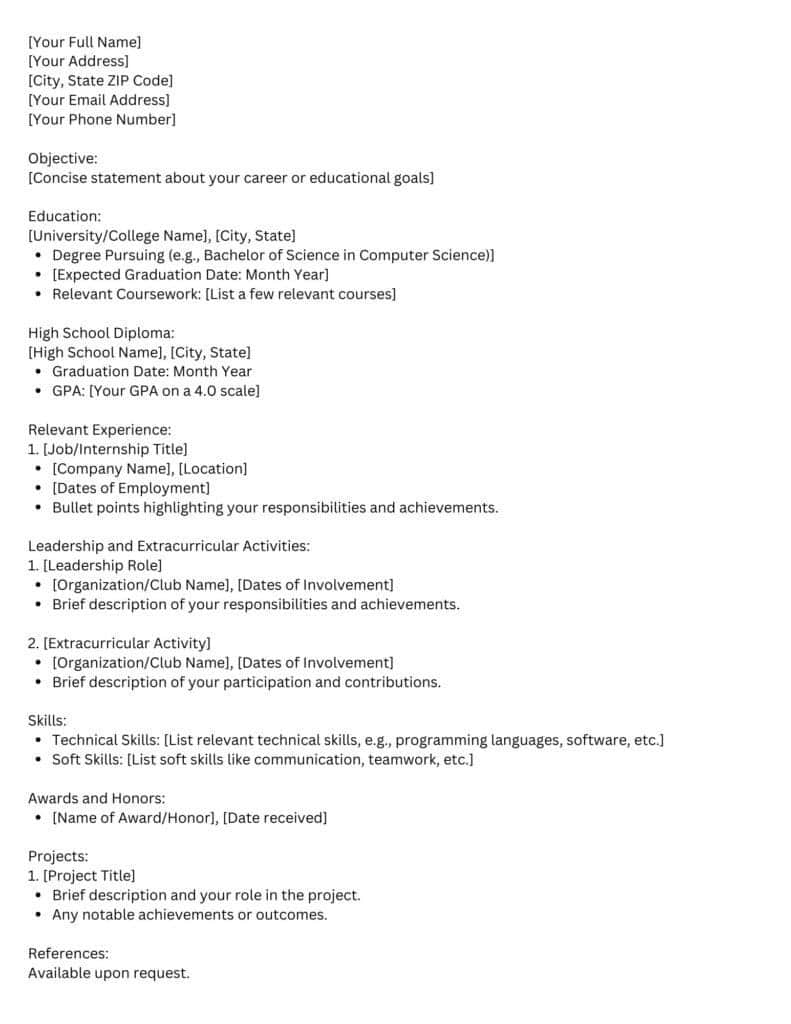
For college students, a resume should reflect academic achievements and professional experiences. Include internships, research projects, campus involvement, and relevant coursework. For instance, “Summer Intern at XYZ Tech Firm” demonstrates real-world application, while “Lead Organizer for Campus Earth Day Event” shows initiative and leadership. Even roles in student organizations or part-time campus jobs can highlight skills like teamwork, project management, and communication. Tailoring these entries to your target job or industry can set you apart. Here’s a beginner sample resume to model yours after:
Resume Tips for Students
If you’re feeling stuck, start simple. Some of the best resume tips for college students focus on clarity and relevance. Keep your layout clean, use bullet points, and tailor each resume to the job you’re applying for. Highlight coursework, internships, campus leadership, and measurable results when possible.
When thinking about how graduating college students can prepare for work, the key is to translate academic experience into workplace skills. Group projects show collaboration. Research papers show analysis. Part-time jobs show responsibility.
For younger applicants, reviewing High School Resume Examples & Tips can help you see how to organize activities, volunteer work, and academic achievements in a way that feels professional without overstating experience.
Using AI Resume Tools
AI can be a helpful starting point when you’re unsure where to begin. If you’ve been browsing resume examples for college students and still feel uncertain, AI tools can suggest structure, wording, and formatting ideas. The key is knowing how to use AI to write a resume without copying generic phrases. Start by giving detailed information about your real experiences, then edit the draft so it sounds like you.
It’s also smart to learn how to use AI to refine your resume. Ask it to tighten bullet points, clarify skills, or tailor content to a specific job description.
How to Use AI to Write a Resume (Step-by-Step for Students)
Step 1: Gather Your Experiences and Achievements
Before opening any AI resume tools, take time to list your real experiences. Include part-time jobs, volunteer work, leadership roles, academic projects, awards, and extracurriculars. This same information can also support applications if you are exploring how to get a college scholarship, so it helps to have everything organized in one place.
Step 2: Use AI to Draft Bullet Points
Input your details and ask the tool to turn them into concise, action-driven bullet points. Focus on skills and outcomes.
Step 3: Edit for Accuracy, Clarity, and Voice
Review carefully to ensure it sounds natural and aligns with standard Resume & Cover Letter Guidelines.
Step 4: Get Feedback From a Counselor or Mentor
Have a teacher, counselor, career center advisor, or mentor review it before submitting.
Common Resume Mistakes Students Should Avoid
One of the biggest mistakes students make is trying to sound overly impressive instead of being clear and specific. Long paragraphs, vague phrases like “hard worker,” and cluttered formatting can weaken an otherwise strong resume.
Another issue is including unrelated information while omitting meaningful activities, such as volunteer work or leadership roles. Reviewing resume tips for high school students can help you focus on organization and relevance.
It’s also a good idea to study College Student Resume Examples to see how experience is presented concisely.
Finally, always proofread. Even small spelling or grammar errors can leave a negative impression.
Final Resume Advice for High School and College Students
If you are still second-guessing writing your resume, that’s totally normal. Most students are not sure what “counts” or whether they have done enough. The truth is, growth matters more than perfection. Keep adding to your resume as you finish new projects, take on leadership roles, or try something outside your comfort zone.
High school mentoring programs like those offered by Reality Changers provide practical guidance on organizing experiences that feel clear and authentic. Through our College Apps Academy, students learn how a strong resume supports scholarships, internships, and college applications. With thoughtful guidance and honest reflection, your resume can show real progress and open meaningful opportunities.mber, every skill and experience counts. With a clear format and attention to detail, you’ll have a resume that truly represents you in no time.